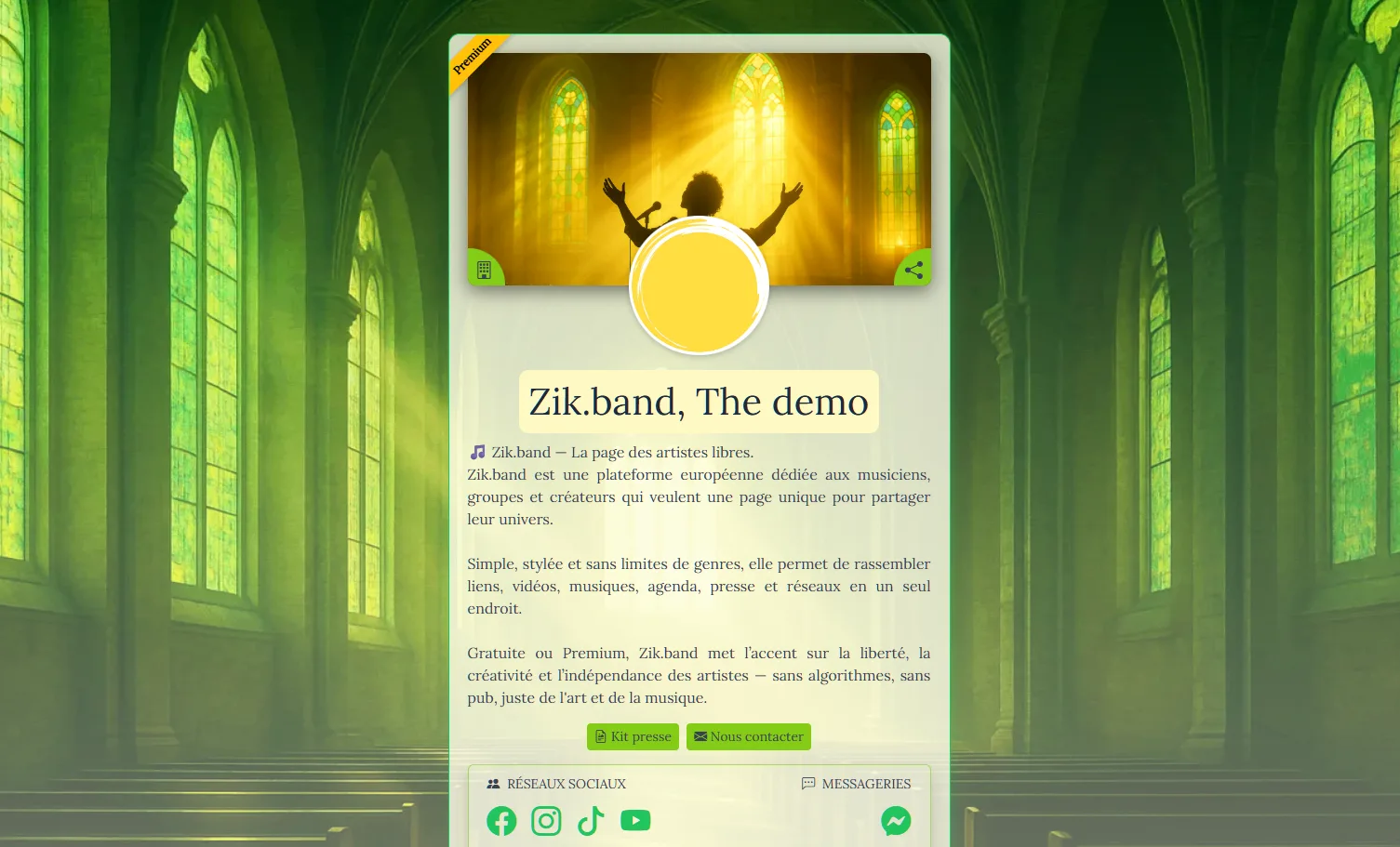
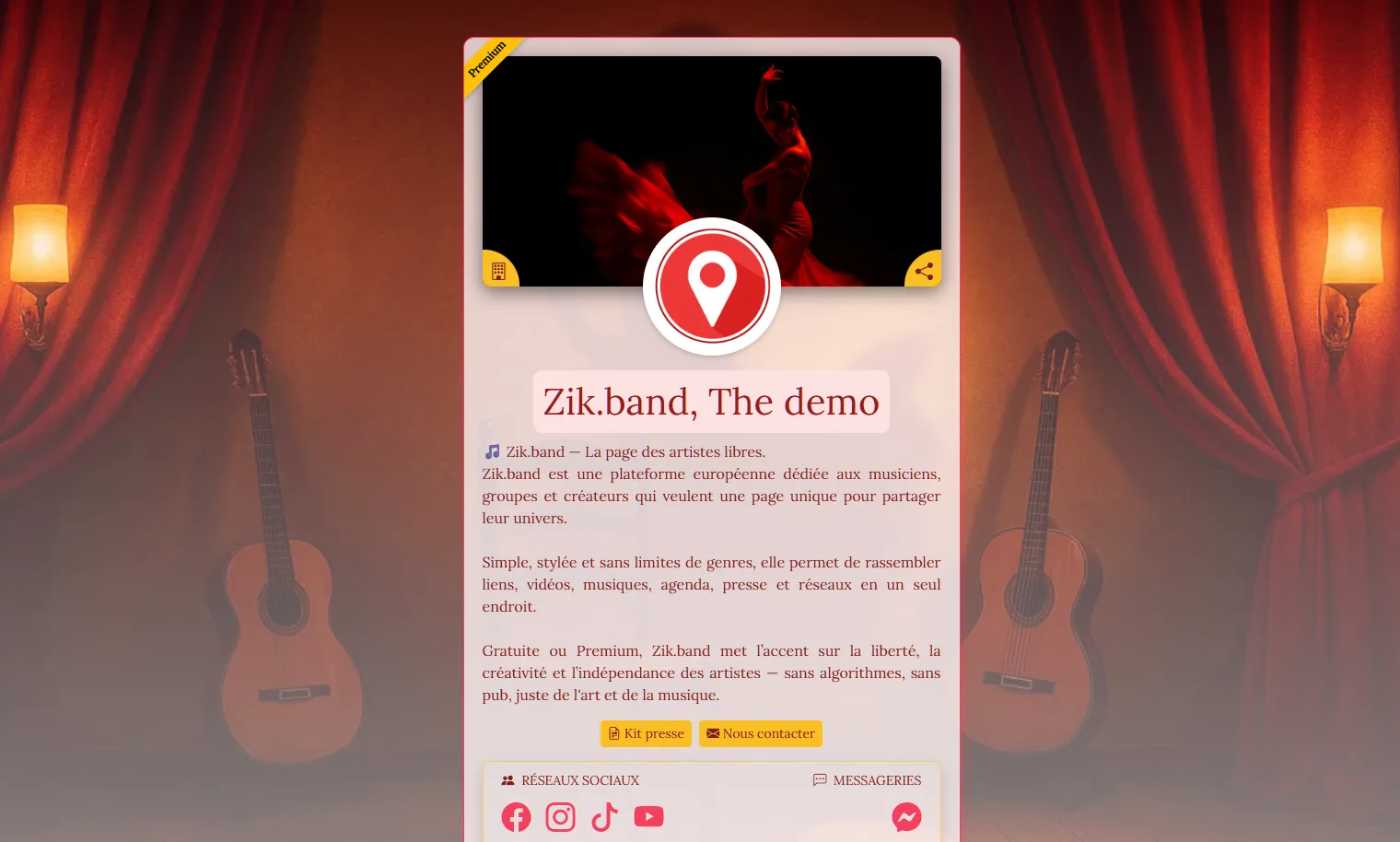
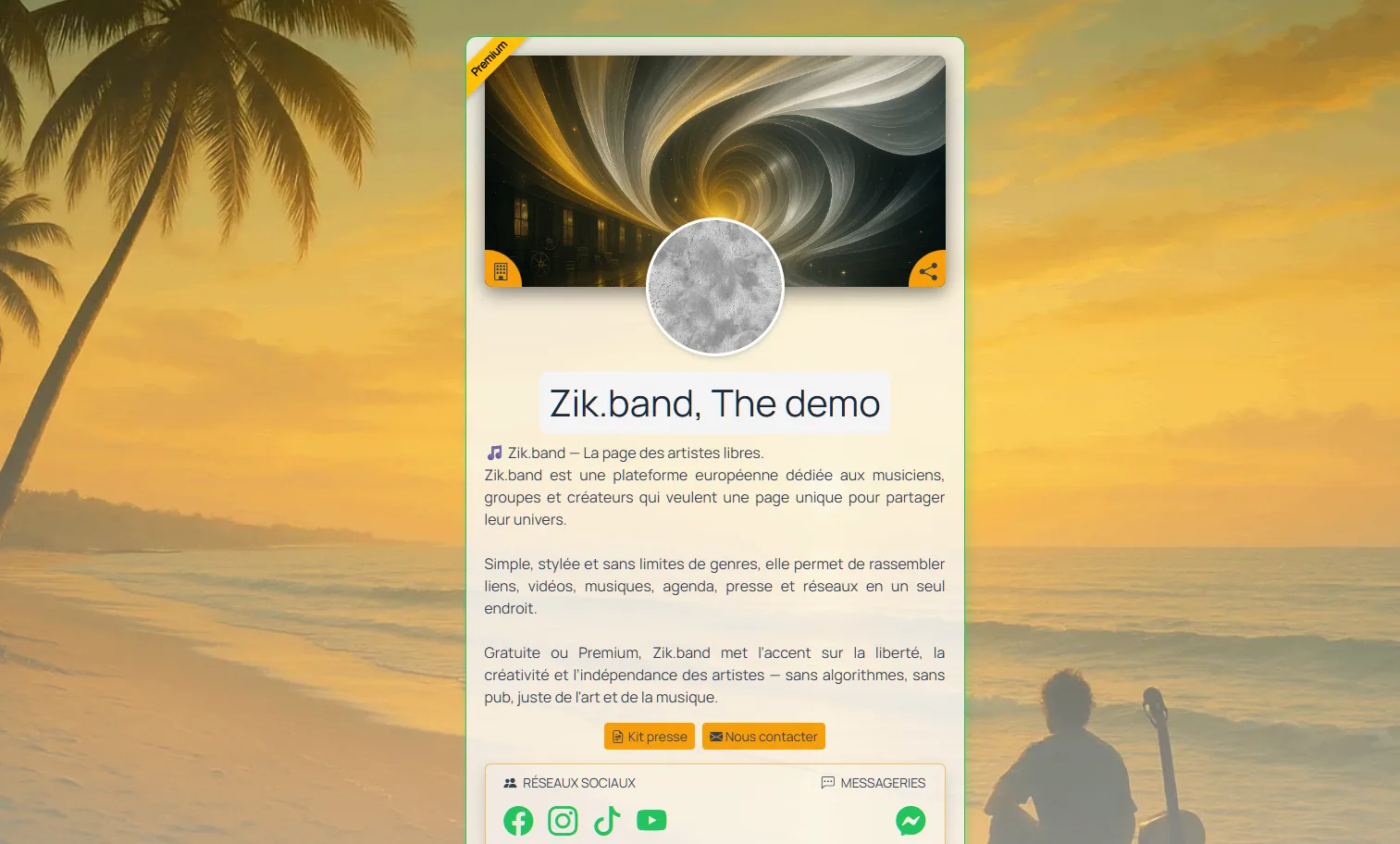
Many artists think they need a complex website or weeks of work to improve their digital presence. In reality, a well-designed music One-page can transform their image in less than an hour.
The goal is not to do everything. The goal is to focus on what truly matters.
Why online image has become an artistic priority
First impressions now happen on a screen
Ten years ago, artists were discovered through live shows, word of mouth, and sometimes local press coverage. Today, the first contact is almost always digital. A booker receives a link. A journalist searches a name on Google. A fan scans a QR code on a poster. That moment - that first look at your online presence - determines what happens next.
The problem is that many artists have a fragmented presence. A Spotify profile here, an Instagram account there, a Facebook page that hasn’t been updated in two years, an old website built in a hurry. When someone tries to understand who you are, they have to piece everything together themselves. Most of the time, they simply won’t.
Consistency as a credibility booster
A consistent online presence does not mean a uniform one. It means clarity. When someone lands on your page, they should immediately understand who you are, what you do, and how to reach you. This clarity is not a luxury - it is the basic condition for being taken seriously.
A well-built music One-page acts as a central hub. It brings your universe together under one address that is easy to share, easy to remember, and easy to browse from a phone. In terms of artistic branding, this centralization is a powerful lever. It transforms a scattered presence into a confident identity.
Step 1: Clarify your identity before building your page
A page without intention is useless
This is the most common mistake. You open a tool, start filling in fields, add photos, paste links - and end up with a page that looks like everyone else’s. Not like you.
Before creating anything, you need to answer one simple question: if someone discovers my project for the first time, what should they understand within 10 seconds? Not in two minutes. Not after reading your full bio. In 10 seconds.
The core trio
Your online artistic identity is built on three fundamental elements. First, your musical positioning - not a list of genres, but a way of defining yourself that makes people want to know more. Then, your visual identity - a strong photo, consistent colors, an atmosphere that matches your music. Finally, your core message - that sentence or short text that summarizes the essence of what you offer.
These three elements form the backbone of your One-page. If one of them is unclear, everything else will be too.
Step 2: Structure your page to guide the eye
Visual hierarchy is a matter of respecting the visitor
An effective page is not a pile of blocks. It is visual storytelling. It welcomes, guides, and convinces - in that order. When a visitor lands on your page, their eye instinctively looks for an entry point. If everything has the same importance, then nothing truly matters.
Visual hierarchy is the art of deciding what should be seen first, what comes next, and what can wait. On a music One-page, this order follows a simple logic: create immediate visual impact, introduce the artist concisely, provide access to the music, offer social proof or video content, then invite action.
Less than 20 minutes if you are prepared
The structure itself does not take long. What takes time is gathering the content. A good photo, a short introduction text, a Spotify or YouTube link, a few visuals or screenshots - all of this should be ready before you begin. If you are starting from scratch with the content, expect to spend more time. But if you already have these elements ready to go, 20 minutes is enough to organize a clear and readable page.
Step 3: Choose the right links, not all the links
The trap of completeness
It is tempting to include everything. Every social network, every platform, every link. You may think that the more there are, the more options visitors will have. In reality, it is the opposite. Too many links create confusion and dilute attention. Visitors no longer know where to click, so they click nowhere.
A high-performing One-page works on the principle of intentional selection. You choose what truly matters and showcase it clearly.
What really matters
In practical terms, one main streaming platform is enough - the one where your catalog is the most complete and the most relevant for your audience. One strong video, whether a music video or live performance, that shows your universe in action. The two or three social networks where you are genuinely active, not the ones you created three years ago and never updated again. And one direct, simple contact method, without a long form.
That is enough. It is even more than enough - it is strategic.
Step 4: Build storytelling that feels authentic and memorable
A biography is not a résumé
Many artists treat their biography like a list of facts: education, starting date, influences, discography. That is not what captures attention. What captures attention is a story. Not necessarily spectacular - just real and well told.
Artistic storytelling relies on a simple framework: where you come from, what you offer today, and what makes you different from others. Three elements. A few lines. A tone that feels like you. That is all.
Conciseness as a strength
On a One-page, you do not have room for a long biography. And that is actually a good thing. The limitation forces you to focus on what truly matters in your artistic story. A short and well-written introduction is almost always more effective than a long and exhaustive text. It leaves room for curiosity - and curiosity is what makes people want to listen.
Step 5: Think about distribution from the very beginning
An invisible page is useless
It sounds obvious, yet many artists create a page, feel satisfied with it, and then leave it sitting quietly without really sharing it. A One-page only has value if it circulates. It should be designed as a distribution tool from the beginning, not as a showcase you hope people will randomly discover.
Integrate the page into your ecosystem
In practice, a few simple actions are enough to truly activate your page. Add your link to your Instagram and TikTok bios. Add a QR code to your posters, flyers, and physical materials - it is quick to generate and incredibly effective at concerts. Prepare a simple announcement post for each of your active social networks. Update your email signature. These actions take about ten minutes in total, but they transform your page from a passive showcase into an active tool.
One-page or full website: knowing where you stand
The One-page format forces clarity. It limits distraction, makes mobile reading easier, and strengthens immediate impact. For an artist who is starting out, relaunching a project, or trying to simplify their presence, it is the fastest and most effective format to implement.
For a more advanced strategy - deeper SEO, an online store, multiple pages, regular editorial content - a full website will be more suitable. It is not the same need, nor the same stage of the journey. We will explore this approach in a dedicated article because it requires a broader strategic vision and a different level of time investment.
But for a fast, concrete, and visible improvement of an artist’s image, the One-page remains today the most relevant format.
🚀 Create your One-page in just a few minutesZik.band allows artists to centralize their musical universe on a clear, professional, and ready-to-share page.
🎯 Launch your page today and structure your image in less than an hour. |
Photos